
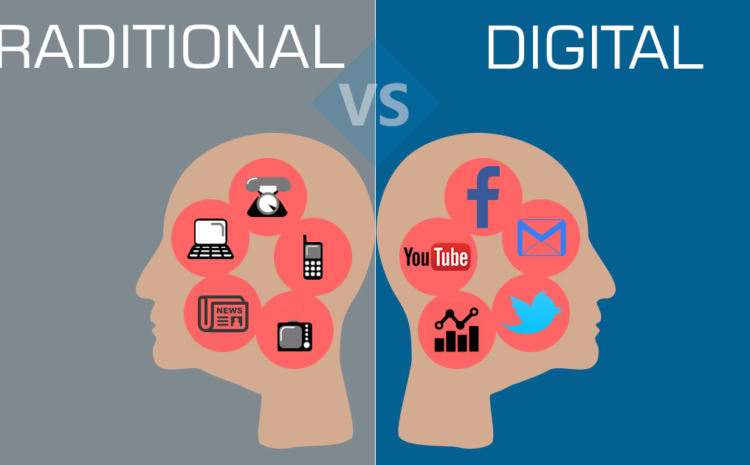
Marketing is one of the most important parts of growing a business. Whether you are a startup, local business, service provider, or established company, reaching the right customers is essential.
Today, businesses can promote themselves through digital marketing as well as traditional marketing. But what is the difference between the two? What are their advantages, limitations, costs, and potential uses?
Let’s compare digital marketing and traditional marketing in a simple and practical way.
What Is Digital Marketing?
Digital marketing means promoting products or services through online channels. Businesses can use websites, search engines, social media, email, online advertising, and content to connect with potential customers.
Common Digital Marketing Channels
- Search Engine Optimization (SEO)
- Social Media Marketing
- Google and other online advertising
- Content Marketing
- Email Marketing
- Website Marketing
- Video Marketing
- Performance Marketing
- Local SEO
Digital marketing allows businesses to target specific audiences and track campaign performance through measurable data.
What Is Traditional Marketing?
Traditional marketing refers to marketing methods that existed before the widespread use of digital channels.
Common examples include:
- Television advertising
- Newspaper advertisements
- Radio advertising
- Magazines
- Billboards
- Brochures
- Flyers
- Direct mail
- Outdoor advertising
Traditional marketing can still be useful, particularly when businesses want to reach a broad local or offline audience.
Digital Marketing vs Traditional Marketing
| Feature | Digital Marketing | Traditional Marketing |
|---|---|---|
| Main channels | Websites, search engines, social media, email, online ads | TV, newspapers, radio, magazines, billboards |
| Audience targeting | Highly targeted | Generally broader |
| Measurement | Detailed online analytics available | Measurement can be more difficult |
| Interaction | Two-way interaction is common | Usually more one-way |
| Content changes | Can be changed quickly | Changes may require new production |
| Geographic reach | Local, national or global | Local, regional or national depending on channel |
| Customer engagement | Comments, messages, shares and clicks | Usually limited direct interaction |
| Budget flexibility | Campaigns can often start with smaller budgets | Some channels may require significant upfront spending |
| Speed | Campaigns can be launched and adjusted quickly | Production and placement can take longer |
| Personalization | High potential for personalized messaging | Generally more limited |
Key Differences Between Digital and Traditional Marketing
1. Audience Targeting
One of the major differences is targeting.
Digital marketing platforms can allow businesses to target audiences using factors such as location, interests, demographics, search behavior, and previous interactions.
Traditional advertising often reaches a broader audience based on the location or audience of the chosen medium.
2. Measurement and Analytics
Digital marketing provides access to data such as:
- Website visitors
- Clicks
- Impressions
- Leads
- Conversion rates
- Engagement
- Cost per lead
Traditional marketing can also be measured, but depending on the channel, obtaining detailed individual-level performance data may be more difficult.
3. Customer Interaction
Digital platforms allow businesses to communicate directly with customers through comments, messages, reviews, emails, and social media.
Traditional marketing is generally designed around broadcasting a message to an audience rather than creating immediate online interaction.
4. Flexibility
A digital advertising campaign can often be changed quickly based on its performance.
For example, a business can modify its advertisement, audience, budget, or landing page based on campaign results.
Traditional advertising may require new creative production or a new media placement when significant changes are needed.
Which Is More Cost-Effective?
There is no single cost for either digital or traditional marketing. The cost depends on the industry, target audience, location, marketing channel, campaign duration, creative requirements, and business objectives.
For example, a small business may start digital marketing with SEO, social media, content, and a small paid advertising campaign.
A larger business may combine digital campaigns with television, outdoor advertising, radio, or print advertising.
The important question is not simply “Which is cheaper?”
Instead, businesses should ask:
“Which marketing channel can help us reach our target customers and achieve our specific objective?”
Example Digital Marketing Budget Allocation
The following pie chart is an illustrative example only showing how a business might divide a digital marketing budget.
Illustrative allocation:
| Digital Channel | Example Allocation |
|---|---|
| SEO | 30% |
| Social Media | 25% |
| Paid Advertising | 25% |
| Content & Email | 20% |
| Total | 100% |
These percentages are not a universal recommendation. Every business should allocate its budget according to its audience, goals, industry, and campaign performance.
Advantages of Digital Marketing
Wider Online Reach
Businesses can reach customers beyond their immediate physical location.
Better Targeting
Online campaigns can be designed around specific audience segments.
Measurable Performance
Businesses can monitor campaign data and identify which activities are generating results.
Real-Time Optimization
Campaigns can often be adjusted based on performance.
Multiple Content Formats
Businesses can use blogs, videos, images, social media posts, emails, and advertisements.
Advantages of Traditional Marketing
Strong Local Visibility
Billboards, newspapers, radio, and local publications can help businesses reach audiences in specific areas.
Physical Brand Presence
Brochures, flyers, magazines, and other printed materials can provide a physical connection with customers.
Mass Awareness
Television, radio, and outdoor advertising can expose a brand to a large audience.
Useful for Offline Audiences
Some businesses still benefit from marketing to customers who may not spend much time online.
Can Digital and Traditional Marketing Work Together?
Yes. Businesses do not necessarily have to choose only one approach.
A combined strategy can connect offline and online marketing.
For example:
Billboard → Website → Lead Form → WhatsApp/Email Follow-Up → Customer
A newspaper advertisement could include a website address or QR code.
A physical event could be promoted through social media.
A television advertisement could encourage viewers to search for the brand online.
This creates multiple touchpoints between the business and its potential customers.
Digital Marketing vs Traditional Marketing: Quick Comparison
| Question | Digital Marketing | Traditional Marketing |
|---|---|---|
| Can I target a specific audience? | Yes, through many digital platforms | More limited depending on medium |
| Can I track clicks and online conversions? | Yes | Usually more difficult |
| Can I change a campaign quickly? | Usually yes | Often slower |
| Can I interact with customers directly? | Yes | Limited |
| Can I reach local customers? | Yes | Yes |
| Can I reach customers globally? | Yes | Possible, depending on the medium |
| Is it suitable for small businesses? | Often, depending on strategy and budget | Can be suitable, depending on the channel |
| Can both methods be combined? | Yes | Yes |
How to Choose the Right Marketing Strategy
Before selecting a marketing channel, consider these six questions:
1. Who Is Your Target Audience?
Understand their age, location, interests, buying behavior, and preferred communication channels.
2. What Is Your Goal?
Your goal could be:
- Brand awareness
- Website traffic
- Lead generation
- Sales
- Customer retention
- Local visibility
3. Where Does Your Audience Spend Time?
If your customers frequently search online, SEO and search advertising may be relevant.
If they spend significant time on social platforms, social media marketing may be useful.
For a local audience, a combination of local SEO and offline visibility may be considered.
4. What Is Your Budget?
Set a realistic marketing budget and divide it according to your business priorities.
5. Can You Measure the Results?
Choose suitable metrics before launching your campaign.
For example:
Traffic → Leads → Conversions → Revenue
6. Are You Testing and Improving?
Marketing should not be a one-time activity. Monitor results and make improvements based on data.
The Future of Marketing Is Omnichannel
Modern customers may interact with a business through several channels before making a purchase.
They may:
See a social media post → Search on Google → Visit the website → Read reviews → Contact the business → Make a purchase
This is why businesses increasingly need a consistent presence across multiple channels.
Digital marketing can provide measurable online touchpoints, while traditional marketing can complement those efforts through offline visibility.
Conclusion
Digital marketing and traditional marketing both have their own applications.
Digital marketing offers businesses tools for online visibility, audience targeting, customer engagement, and performance measurement. Traditional marketing can provide strong offline visibility through channels such as television, radio, print, and outdoor advertising.
Rather than automatically choosing one over the other, businesses should consider their target audience, goals, budget, location, industry, and measurable results.
A well-planned marketing strategy can combine digital and traditional channels where appropriate and create a consistent customer journey across online and offline platforms.
Ready to Grow Your Business?
A strong digital presence starts with the right strategy. SEO, social media marketing, content marketing, paid advertising, and a professional website can work together to help businesses connect with potential customers online.